
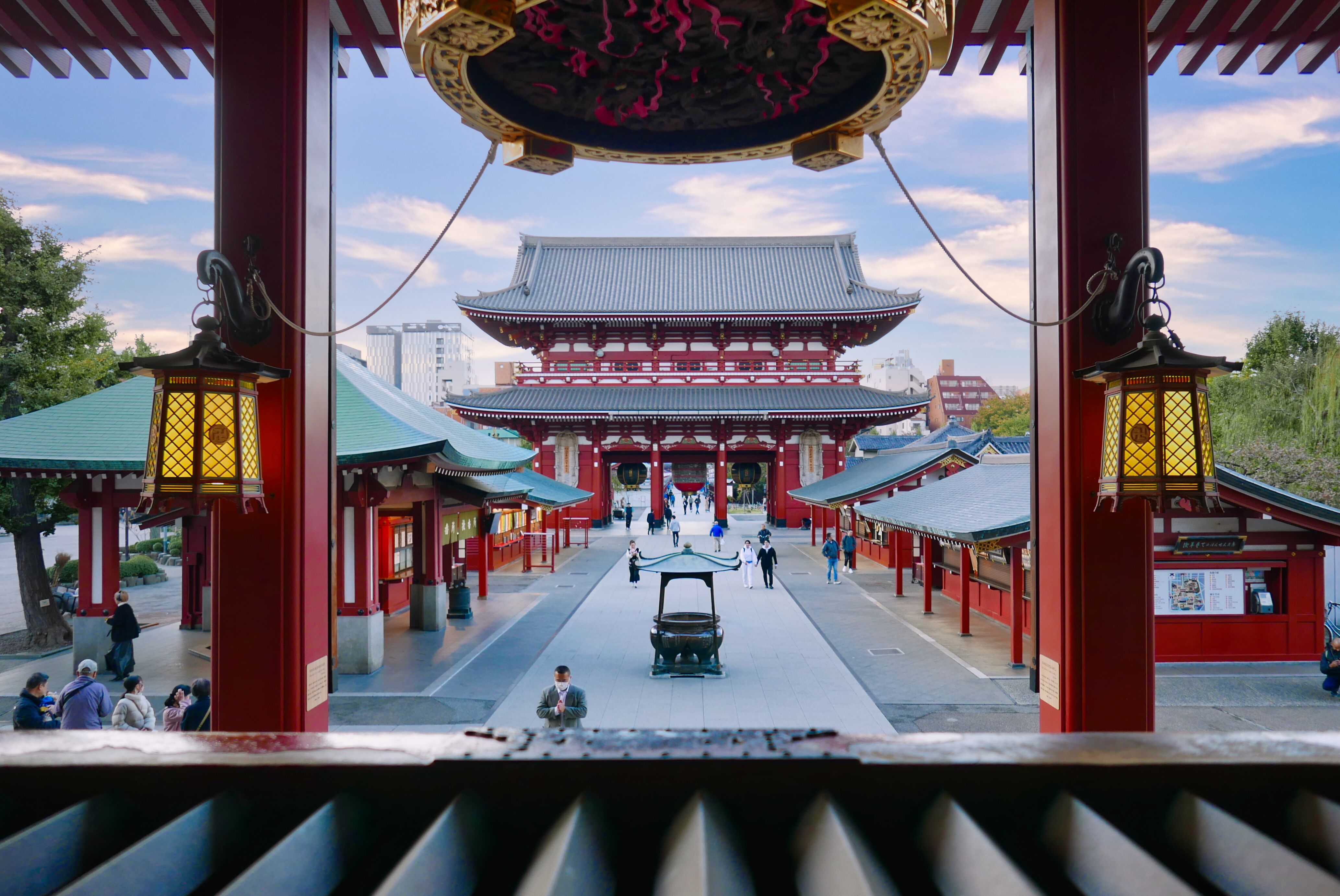
From the iconic Sensoji, and the graceful museums of Ueno, to the atmospheric alleys lined with small eateries and traditional craft shops, the Taitō City in northern Tokyo displays an irresistible retro charm. It offers a glimpse into the Japanese capital during the Edo and early Meiji periods when this area was a bustling center of commerce and entertainment.
As part of Shitamachi or “Downtown”, Taitō City has historically been the home of artisans, fishermen, sailors, and merchants. Its roots date back to the early 17th century when the Tokugawa shogunate relocated the capital from Kyoto to Edo (present-day Tokyo). The shogunate allocated the solid hilly areas, Yamanote or “Uptown”, to the samurai and aristocrats, leaving the marshlands of northern Edo to commoners. Over time, Shitamachi flourished into a dynamic hub, full of storehouses, workshops, food stalls, and even geisha houses. This development established the district, particularly the Asakusa neighborhood, as an entertainment center of the capital.
The post-war period saw extensive reconstruction efforts in Tokyo, reshaping the cityscape. However, unlike the capital’s hypermodern western side, where bulldozers erased much of the yesteryear charms, Taitō City has successfully preserved many traditional features and elements of the Edo and early Meiji periods. These characteristics can be found in time capsules throughout the district, such as lively street markets, occasional wooden rowhouses known as nagaya, and thoughtfully curated museums. Yet nowhere is the essence of the “Low City” more palpable than in the historic pleasure quarter of Asakusa, where the past and present harmoniously coexist.
1. Asakusa
Sitting on the banks of the Sumida River, Asakusa (浅草) is best known for its old Tokyo vibe. The area was the capital’s entertainment hub during the Edo period (1603-1867), boasting kabuki theaters and an extensive red-light neighborhood. As time passed, Asakusa embraced more contemporary amusement, welcoming the likes of movie theaters to its vibrant landscape by the early 1900s.
However, Asakusa bore the brunt of destructive US air raids during World War II. The area was eventually rebuilt, but its reputation as an entertainment hub waned compared to colorful areas like Shinjuku. As a result, Asakusa reinvented itself as a tourist magnet, cherishing a Tokyo of yore with atmospheric temples, traditional eateries, and local shops that boast more than one hundred years of history.


1.1 Sensoji Temple
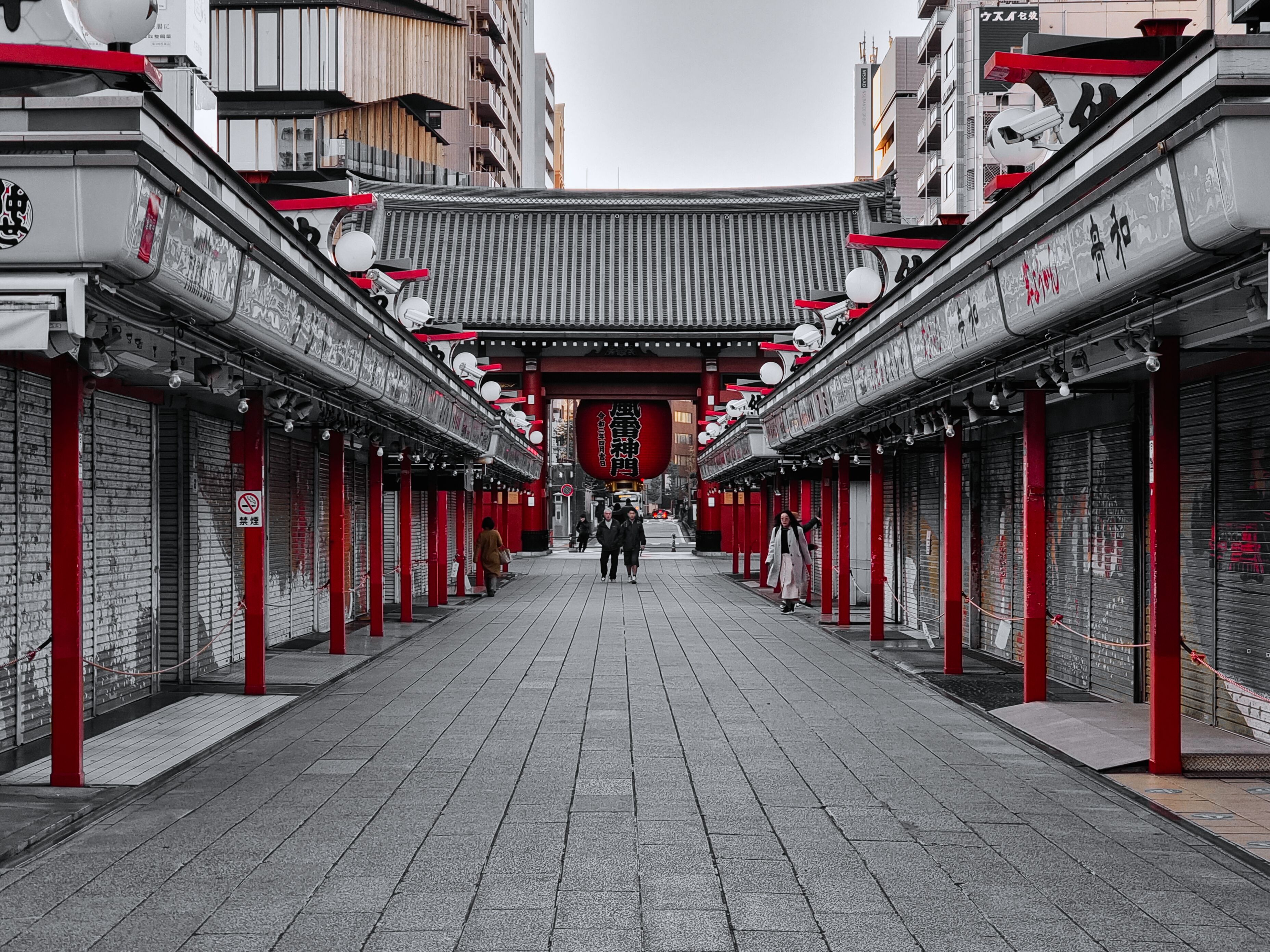
Every day, a steady flow of visitors enter the grounds of Sensoji – Tokyo’s oldest and most iconic Buddhist temple. They are first greeted by the striking “thunder gate” or Kaminarimon, adorned with a colossal bright red lantern that symbolizes Asakusa’s rich history. Afterward, visitors stroll through Nakamise-dori, one of Japan’s oldest shopping streets, where trinkets and time-honored sweets are vying for attention. The bustling street then leads to the principal hall of venerable Sensoji, encircled by auxiliaries, well-kept gardens, and a stunning five-tiered pagoda.
Tokyo’s oldest and most iconic temple.
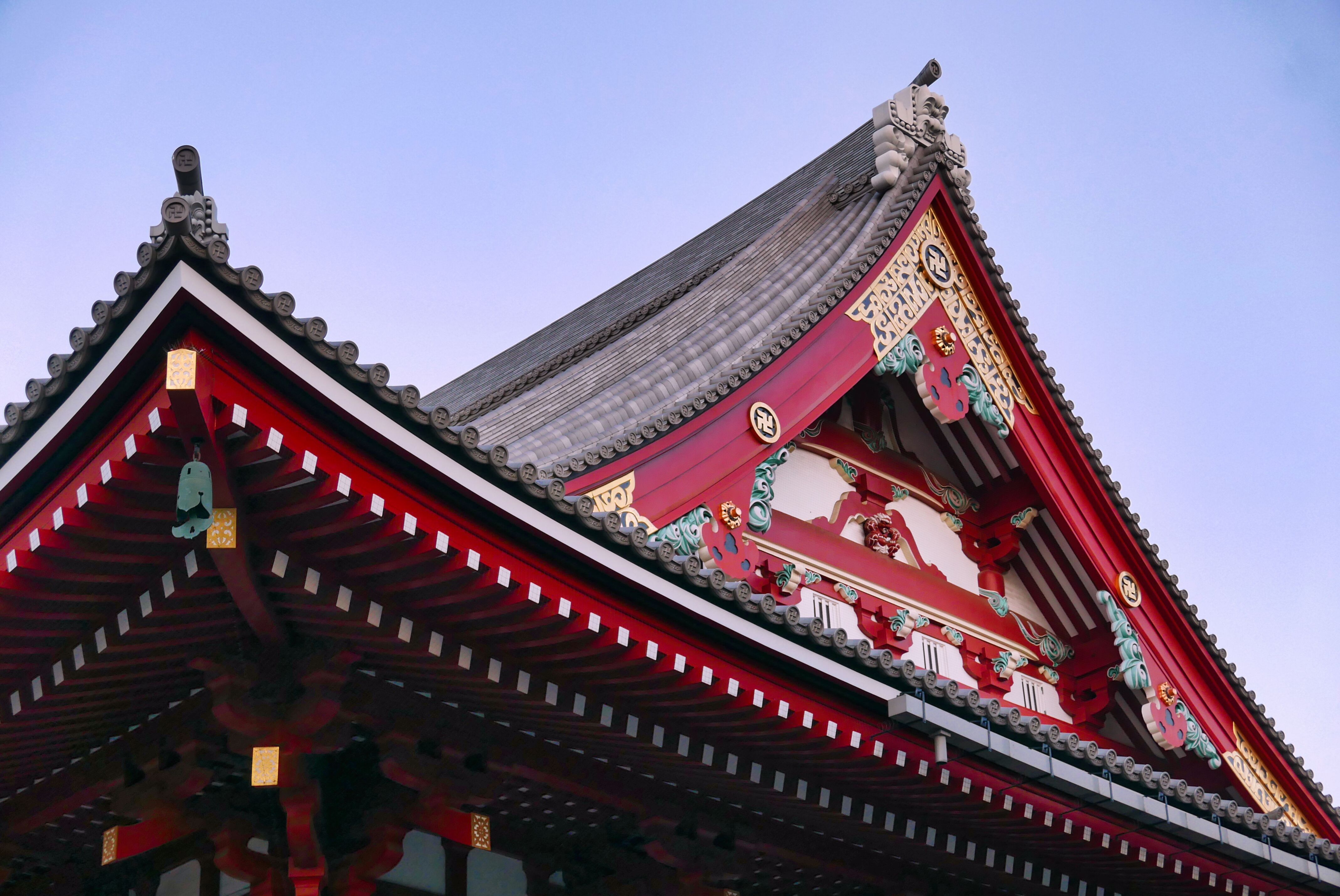
Though today’s appearance was postwar, Sensoji was founded in 628, stemming from a mysterious incident involving a statue of Kannon, the Buddhist Goddess of Mercy. Legend has it that two fisherman brothers retrieved the statue from the nearby Sumida River, which consistently returned to their possession even though they put it back into the water. In response, they constructed Sensoji to pay homage to the sacred statue, completing it in 645. It became the first Buddhist temple open for commoners in Japan, attracting a great number of pilgrims.
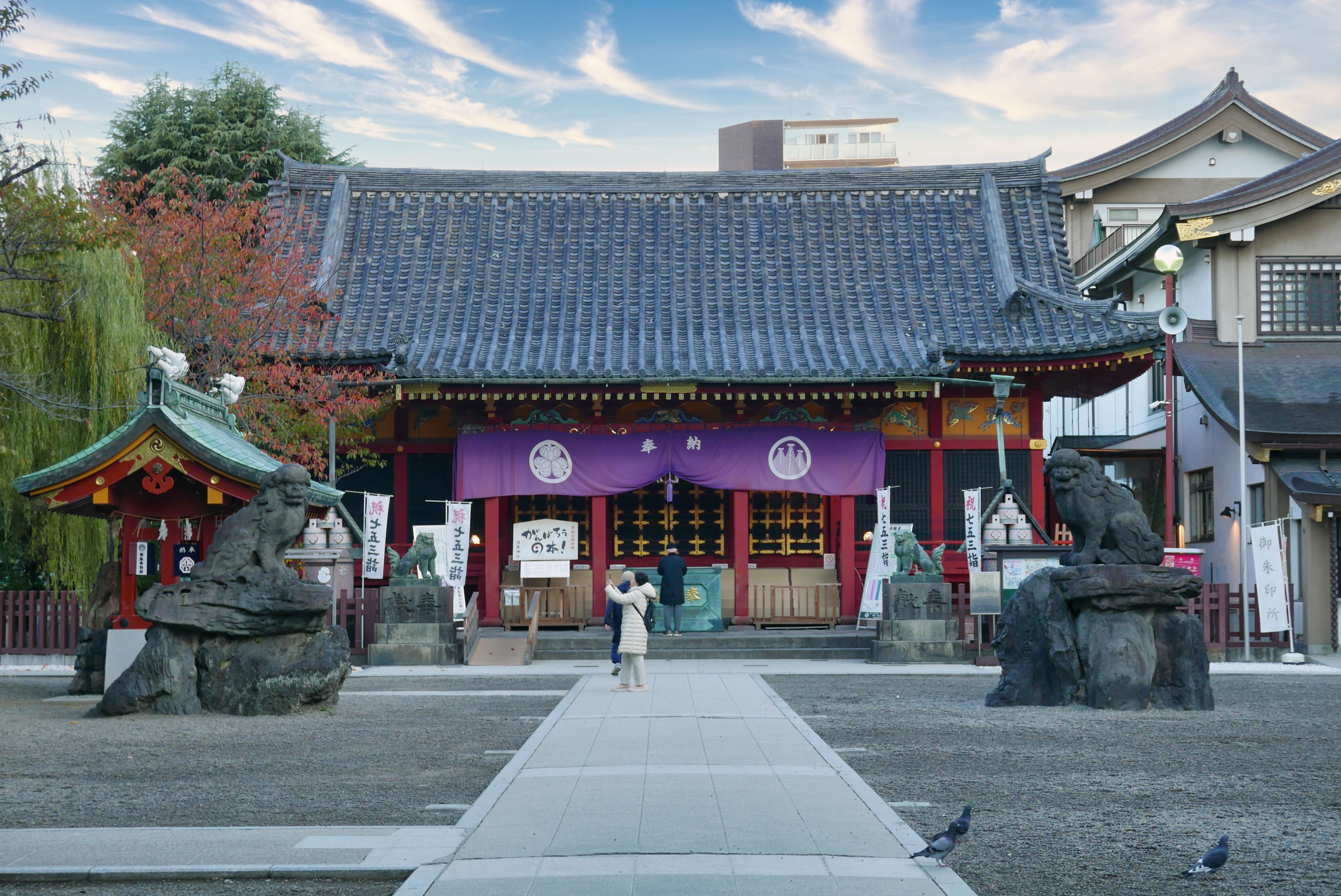
Right next to Sensoji stands Asakusa Shrine – a Shinto shrine dating back to the 7th century dedicated to the two brothers who discovered the Kannon statue. In 1649, it was, however, rebuilt in a more elaborate style following the order of Iemitsu, the third lord of the Tokugawa Shogunate. The place also enshrines Hajino Nakamoto – a scholar who recognized the statue for what it was. For this reason, the Asakusa Shrine is better known as the Sanja-sama or Shrine of the Three Gods.



1.2 Asakusa Culture Tourist Information Center

Standing across from the Kaminarimon, the Asakusa Culture Tourist Information Center is a to-go place for any traveler. It offers everything from maps and brochures to free Wi-Fi connectivity and currency exchange. Beyond these services, the center’s upper floors feature exhibition spaces about Asakusa’s colorful past. The building also boasts conference rooms, a café, and an observation platform with splendid panoramic views over Asakusa and the nearby Sumida River.
Nevertheless, this eight-story building is not just a visitor center. It’s an attraction in its own right due to its unique architecture. Designed by the renowned Kengo Kuma, the visitor center pays homage to Tokyo’s Edo period, featuring a stack of nagaya or “traditional houses” constructed from contemporary materials like glass, steel, and Japanese cedars. The slanted roofs create additional space between each floor, while the distinct wooden louvers on the facade allow for shading and privacy for the interior spaces.


1.3 Tokyo Skytree and around
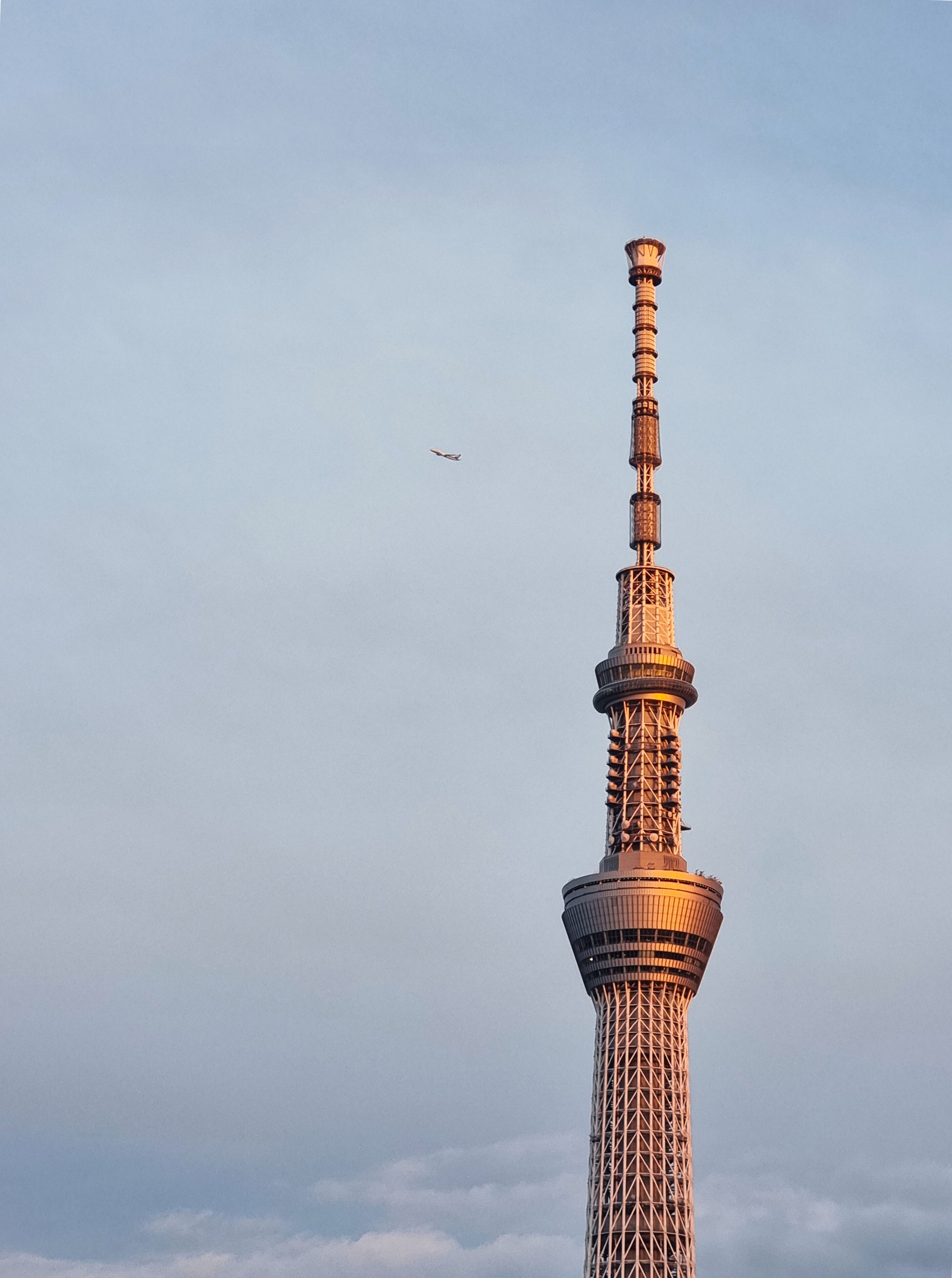
Though not strictly in Asakusa, the impressive Tokyo Skytree dominates the district’s skyline. Soaring 634 meters high, it has held the title of the world’s tallest free-standing tower since its completion in 2012. Beyond two breathtaking observation decks, this bluish-white tower also houses a massive aquarium, a planetarium, and an expansive shopping mall with over 300 shops. This engineering marvel primarily comprises steel and reinforced concrete, making it highly resilient against natural disasters.
Despite its futuristic appearance, Tokyo Skytree bears traces of Japan’s traditional beauty. For example, the tower’s upper part evokes the top of Horyu-ji in Nara, while its grid-like facade is reminiscent of graceful bamboo crafts. Its earthquake-proof structure also mimics the central pillars of wooden pagodas, which effectively absorb shocks and support the buildings.
The world’s tallest tower since 2012.
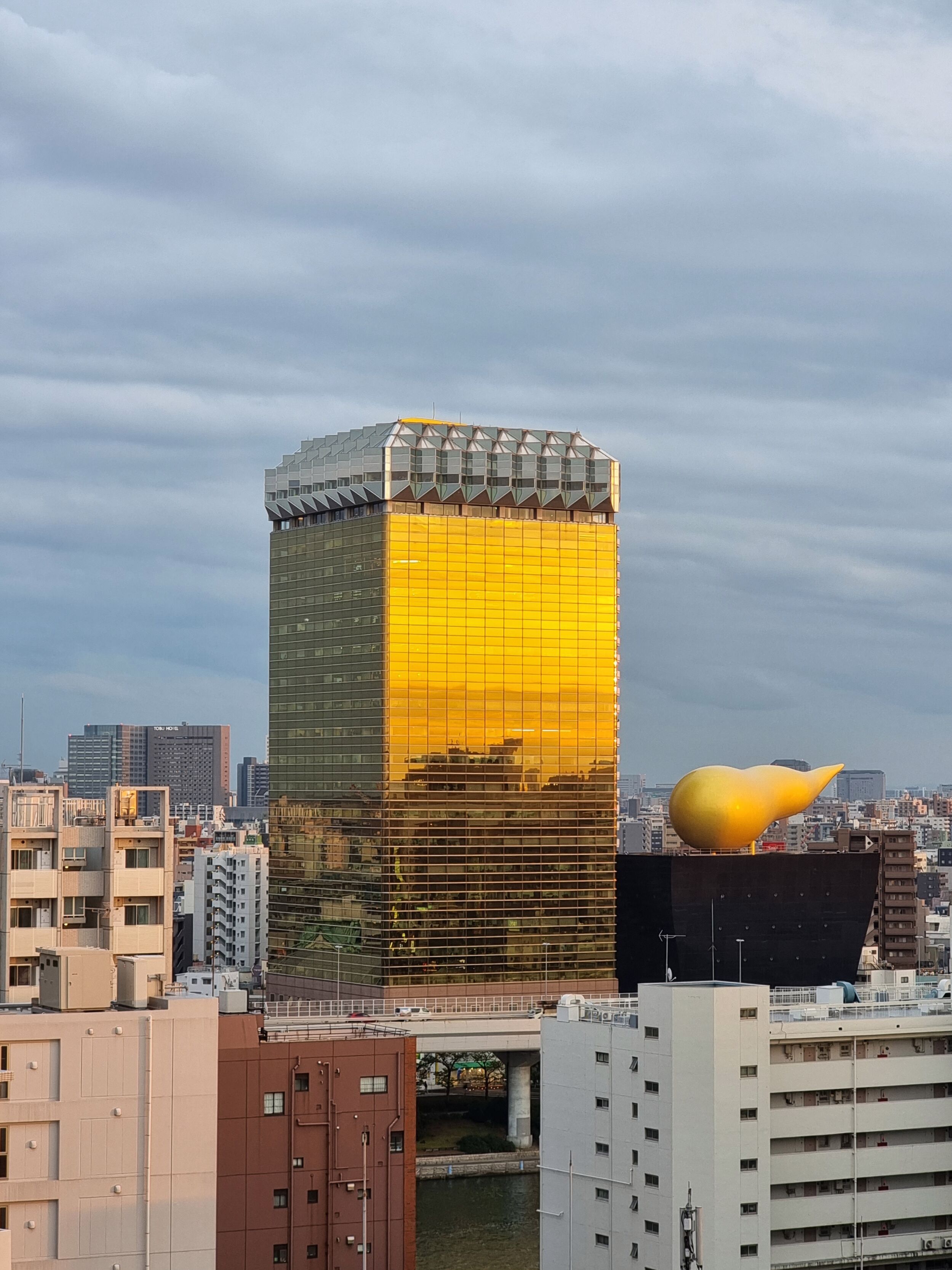
Not far from the Tokyo Skytree is another unique-looking structure, the Asahi Group Headquarters. This 22-story building resembles a beer mug, featuring an amber glass facade and a bubble-like top. Adjacent to it stands Super Dry Hall – a sleek black building topped with the peculiar Flamme d’Or or “golden flame” symbolizing the burning passion of Asahi Breweries. The complex contains several restaurants, including the Sky Room on the top floors, offering spectacular vistas over the Sumida River, the riverside park, and the townscape of Asakusa.


2. Ueno
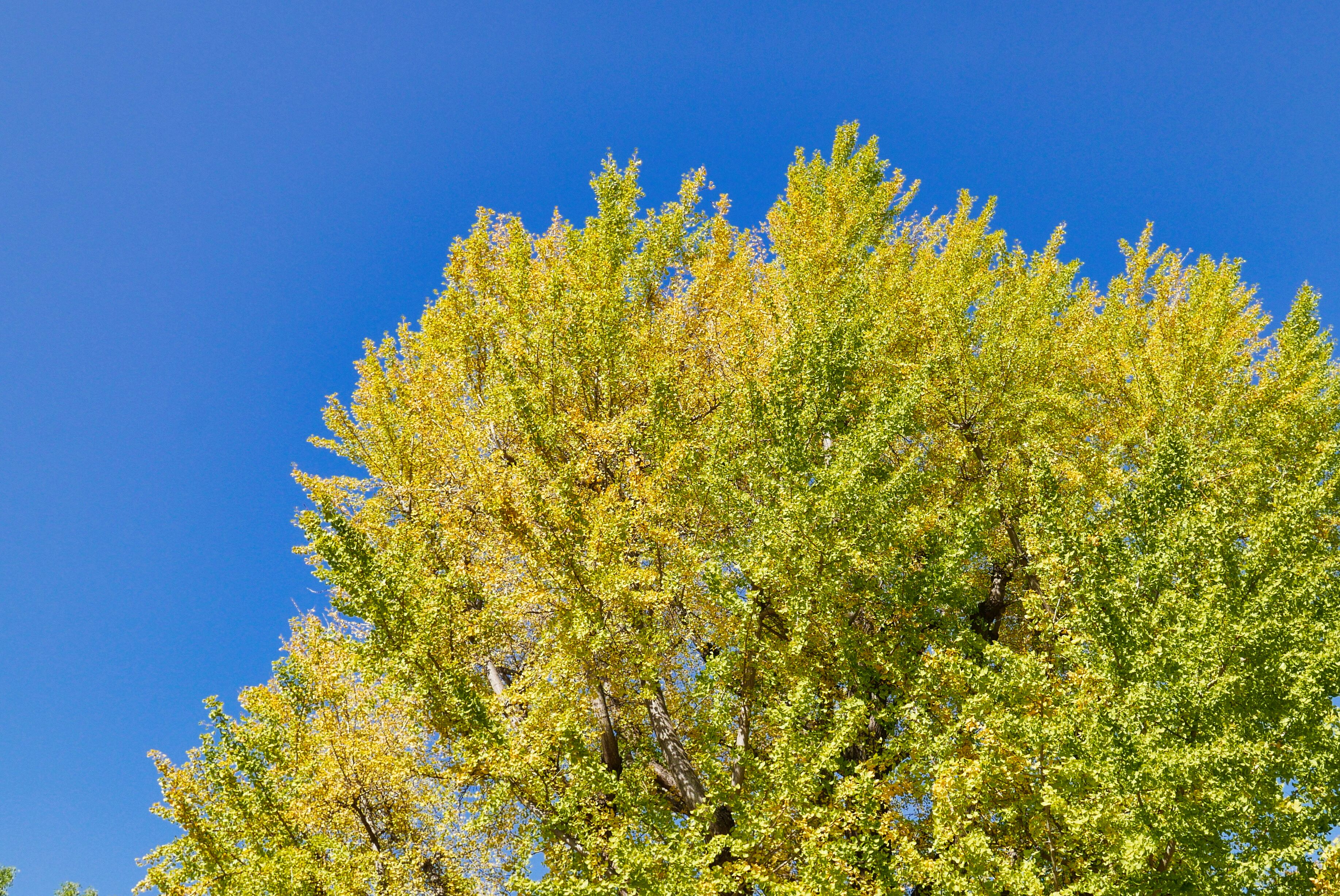
Occupying the western part of Taitō City is Ueno, a district centered around Ueno Station. Since opening in 1883, this station has functioned as the main gateway to Tokyo for people from northern regions, mostly commoners seeking employment. They came here for a better life, which led to significant growth in Ueno’s population and businesses. This trend intensified after World War II, as more workers and laborers settled in the area, transforming it into a boom town.
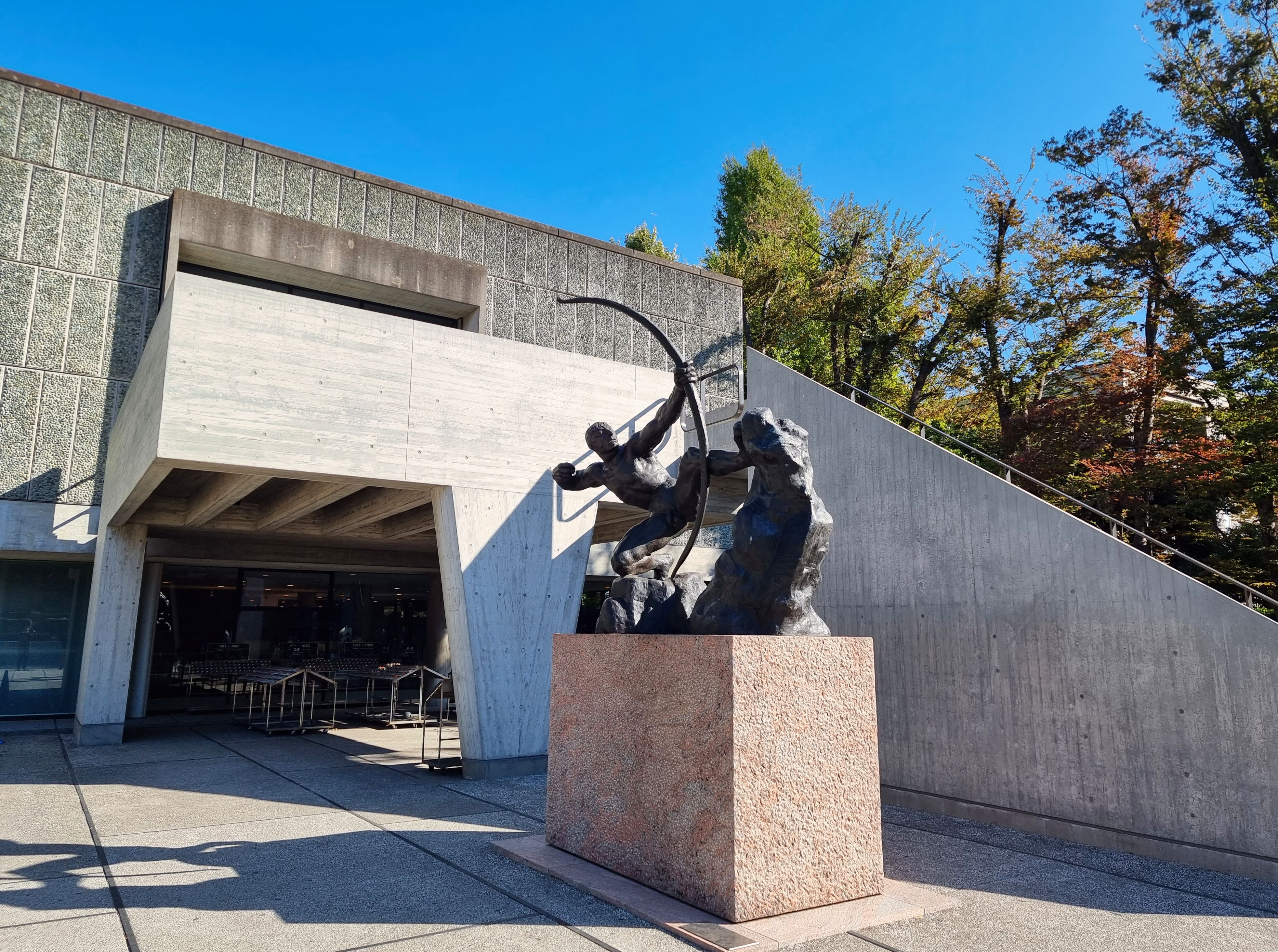
Along with this economic development, cultural and recreational sites gradually emerged, turning Ueno into a museum mecca featuring several remarkable institutions. Highlights include the renowned Tokyo National Museum, the National Museum of Nature and Science, and the National Museum of Western Art, designed by the legendary Franco-Swiss architect Le Corbusier. They dotted around the vast Ueno Park, Japan’s first and largest public garden, established in 1873 during the Meiji Period.


2.1 Tokyo National Museum
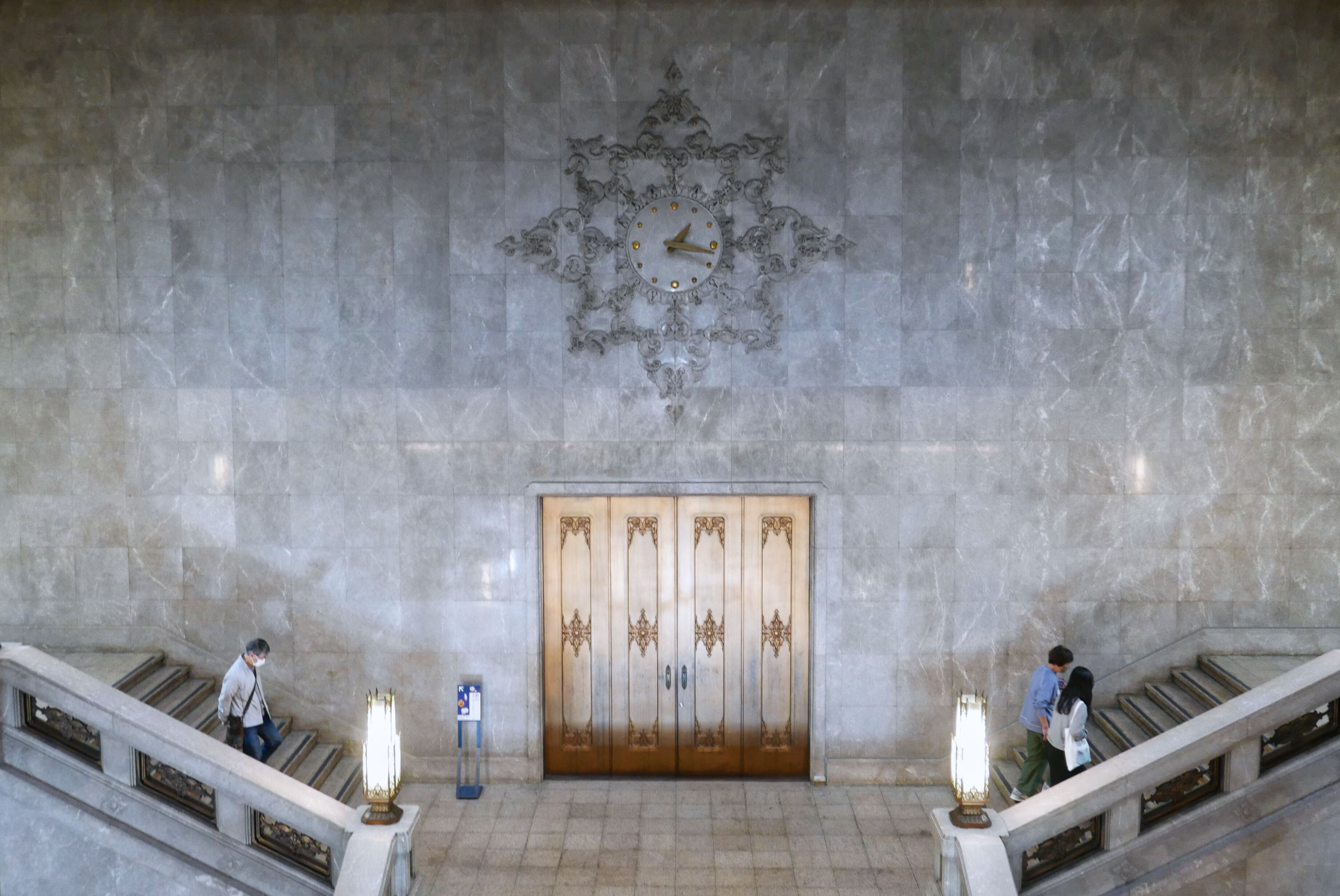
Beginning as a temporary exhibition in 1872 in Ueno Park, the Tokyo National Museum is now Japan’s oldest, largest, and one of the most comprehensive museums in the world. It boasts an incredible collection of 120,000 art pieces from Japan and other parts of Asia, including paintings, calligraphy, pottery, sculptures, lacquers, metalworks, and textiles. Only 3,000 of these are displayed at any given time, meaning each visit promises new and captivating exhibits.
Tokyo National Museum chronicles the rich culture and history of Japan.
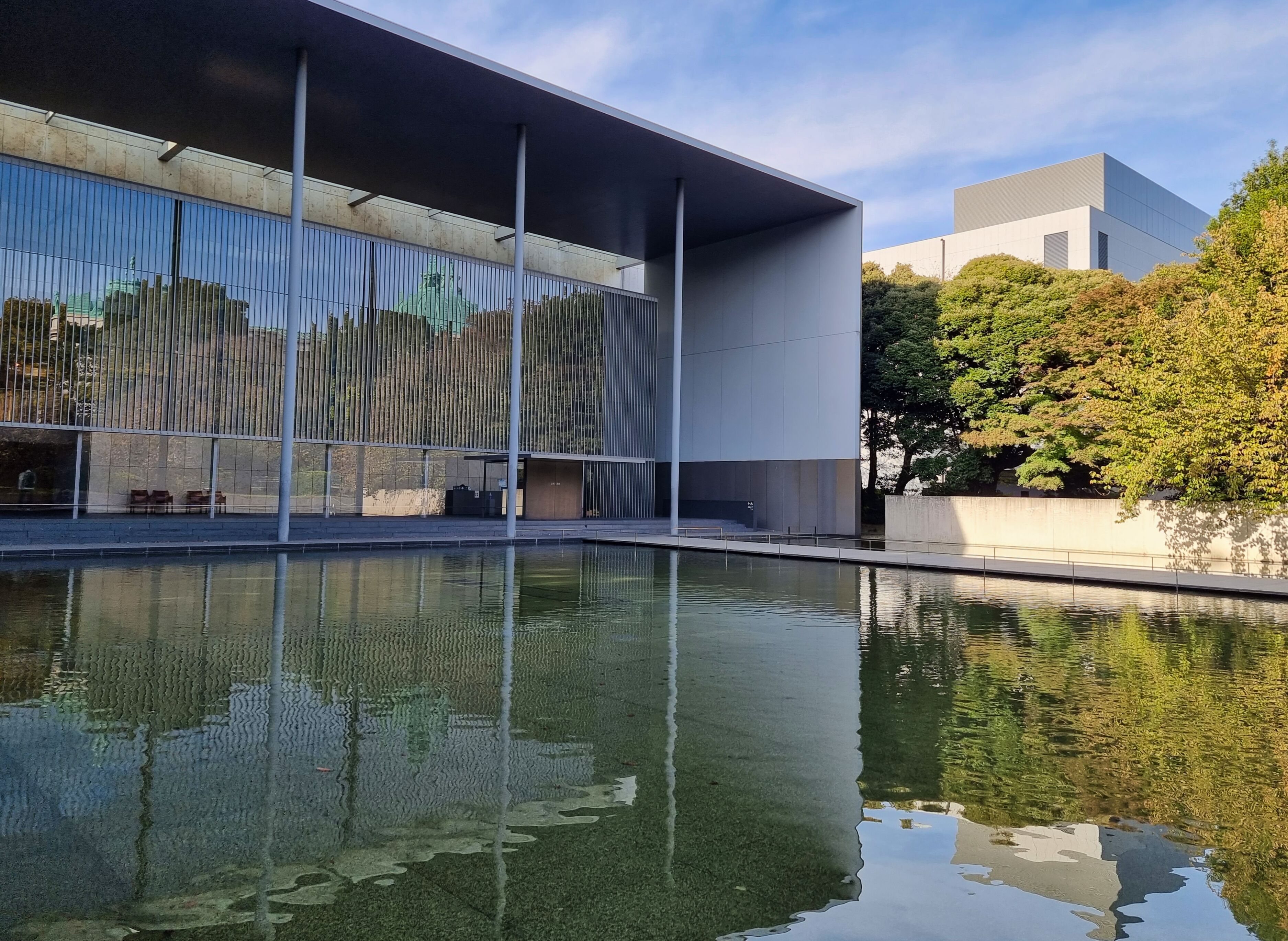
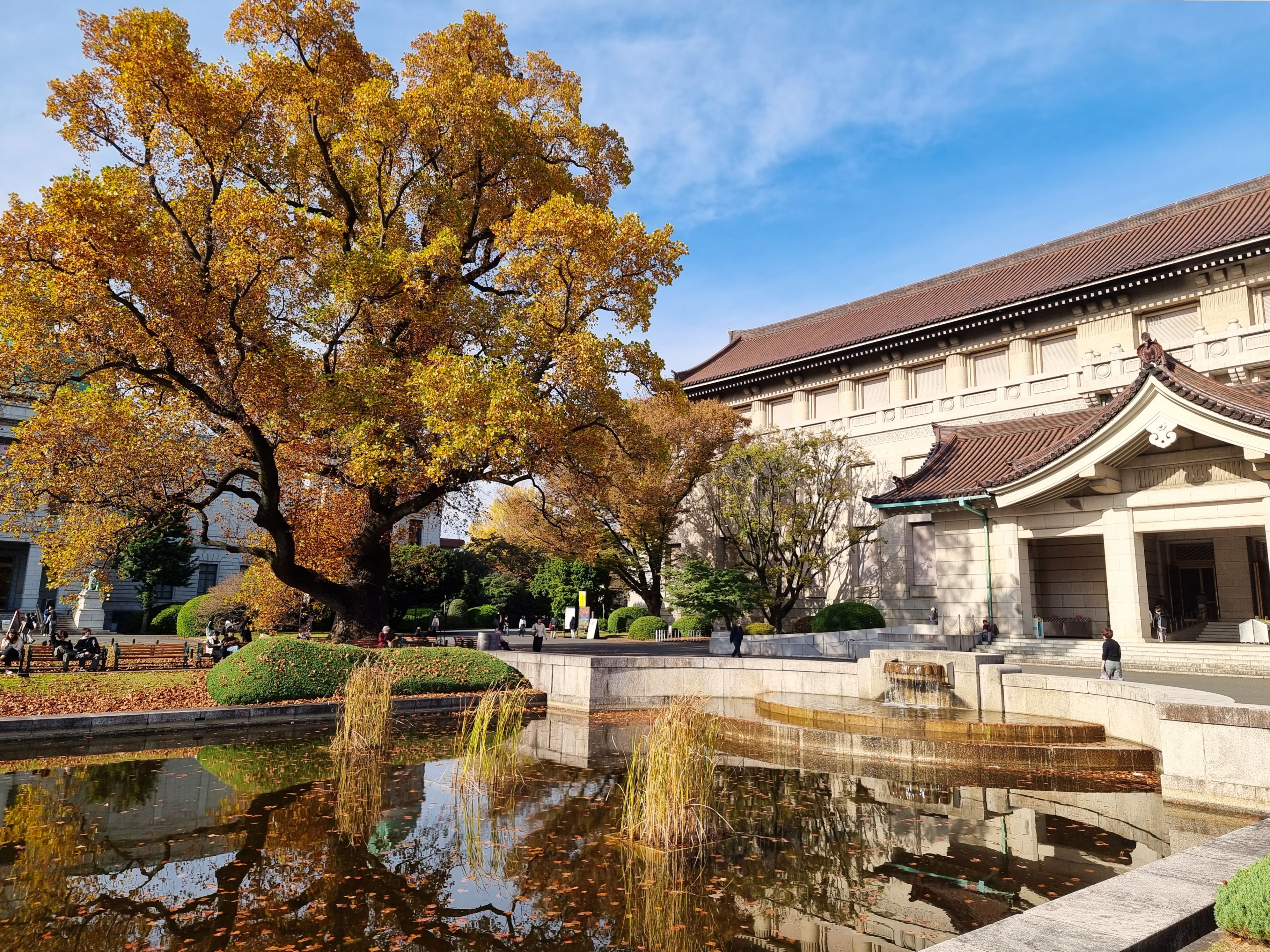
The museum complex comprises six galleries, each large enough to be a museum in its own right and features a distinctive architectural style. For example, the Hyōkeikan – opened only for special exhibitions – has a palatial Western-inspired design. Meanwhile, the Gallery of Horyuji Treasures, which preserves 300 priceless relics from Nara’s Horyuji Temple, presents a contemporary aesthetic with modern straight lines throughout the entire structure.
Nevertheless, the Honkan, or Japanese Gallery, is the most prominent among these galleries, showcasing an extensive range of works created by Japanese artisans from prehistory to the late 19th century. Together with the adjacent Heiseikan, or Japanese Archaeology Gallery, it chronicles the rich culture and history of the Land of the Rising Sun. If times allow, the Asian Gallery is also worth exploring as it reveals discoveries across Asia, such as fine ceramics from Vietnam and China, ceremonial daggers from Taiwan, stunning Greco-Buddhist sculptures from India, and even a regal Korean crown.





Recommended Stay
Newly opened in 2023, OMO3 Asakusa offers a stylish and intimate stay in Tokyo’s old town. Its location is simply unbeatable, steps away from Sensoji Temple and a six-minute stroll from Asakusa Station. The theme is contemporary minimalism, yet like many other places in Asakusa, there are some Edo-aesthetic touches. For instance, the red carpets and purple cushions in Yose rooms evoke a kouza, a raised platform traditionally used for public performances. Meanwhile, the spacious Deluxe Room features elevated tatami mats and large windows offering a direct view of the temple ground.
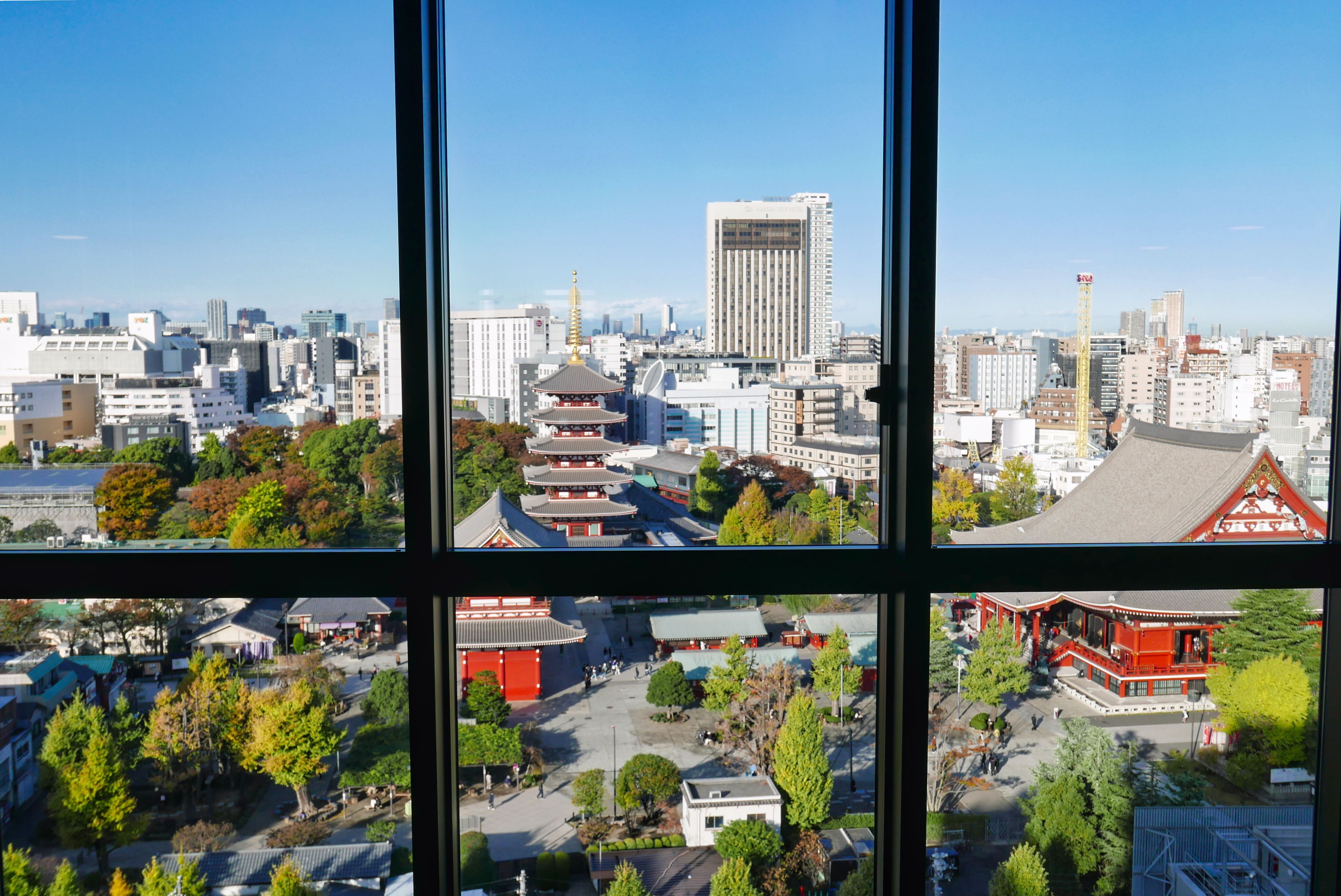
While OMO3 Asakusa may not have a restaurant or café, the hotel makes up for it with a cleverly designed lounge featuring a 24-hour Food and Drink Station. It offers myriad ready-to-eat items, including delectable delights from the neighborhoods. Think of tasty onigiri, mouth-watering dorayaki, or addictive strawberry pops, to name a few. The lounge also boasts magnificent views of the Sensoji Temple and Tokyo Skytree. Plus, there is an open-air sitting area on the rooftop. The hotel also provides a laundry room on the first floor, where guests can wash and dry clothes for a nominal fee.


DISCLAIMER:
My recommendation is written based on my personal experience. It was neither sponsored nor solicited by OMO3 Asakusa or any third party. All texts and pictures reflect my own opinions and are provided solely for informational purposes. I will not be liable for any errors or damages by using this information.


An informative write up of the Taito district. Old town Tokyo certainly has it’s charm. I was intrigued reading about the Asakusa Culture Tourist Information Centre. It really doesn’t sound just like a visitor centre as you described and experienced – and instead designed intentionally and with a lot of thought for people to wander around and enjoy the space itself. Fascinating how both traditional and modern architecture are combined in some of the places you shared. Also enjoyed reading about Tokyo Museum and how they rotate exhibits. Beautiful photos all round, Len. Really enjoyed reading your experience and seeing your photos. Hope you are doing well and wishing you well for the year ahead 🙂
Thanks for the super kind words, Mabel! I hope you are also doing well. Wish you a great 2025 and a wonderful Year of the Snake 🙂 Still don’t believe that we only have 27 days to prepare for the new year. Normally, it would be early or mid-February.
I have never been to Tokyo, but I think if I go I will spend most of my time in Taito City, primarily because of the temple and the National Museum. I’m glad you wrote about this part of the Japanese capital since most people I know rarely mention it when they tell stories from their trip to Japan.
The National Museum is a huge surprise. I intended to spend a few hours there but ended up staying the entire day. One ticket grants access to all galleries, plus the garden.
Except for the area around Sensoji Temple, I found Taito is not very touristic. Another site I wanted to visit is the Edo-Museum, also located in the district. But it’s now closing for renovation (estimated to re-open in 2026).
By the way, Happy New Year, Bama! Wishing you a great year ahead! Please send my greeting to James as well 🙂
James says hello and Happy New Year too! 🙂